3d drawing pen the best one most depenable
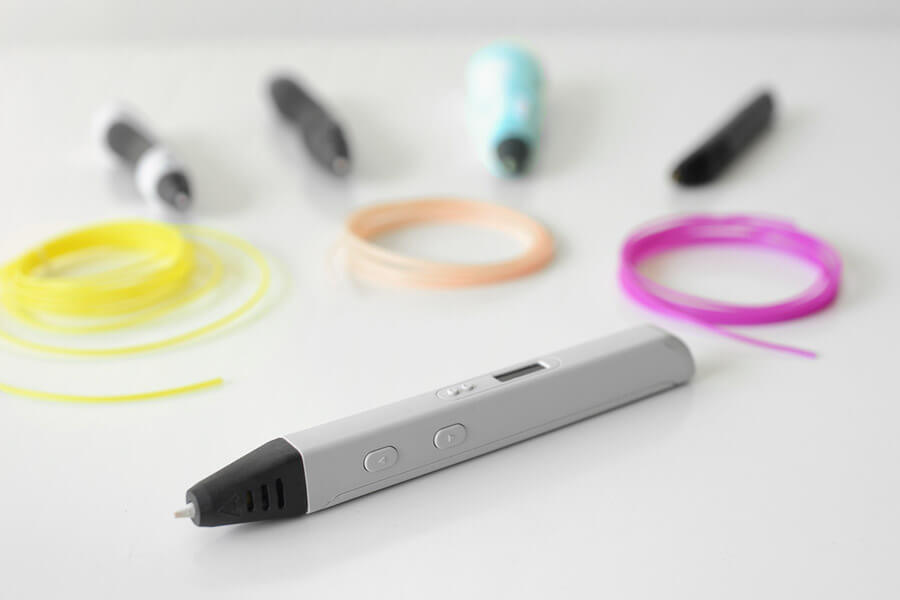
The Best 3D Pen Under $100
Through many hours of all-encompassing research, we corralled user reviews, forum posts, blog articles, video reviews and other best-of lists to make up one's mind that the MYNT3D – Professional 3D Press Pen is the all-time 3D Pen under $100. Nosotros found the MYNT3D operates the most cleanly and precisely. It'south well-built, comes with a simple loading feature and is our only pen with a momentary feed button. Although it takes more effort to load, our runner-upwardly 3Doodler – Create has a sleek anodized aluminum build that puts high quality at your fingertips.
Our Pinnacle Choices
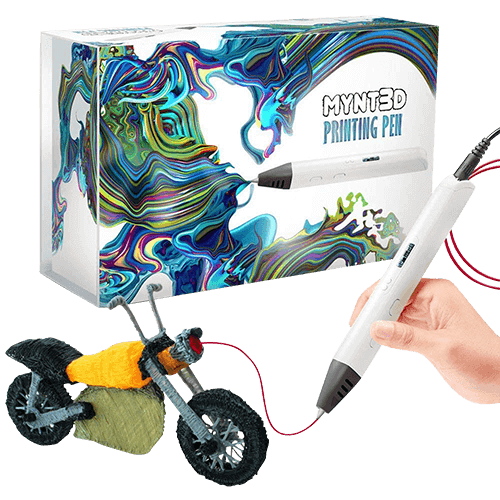
Best 3D Pen
MYNT3D
Professional Pen
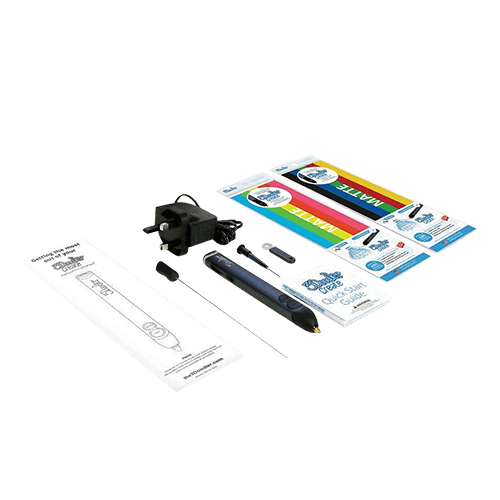
Runner-upwards
3Doodler
Create
Through many hours of extensive research, we corralled user reviews, forum posts, blog articles, video reviews and other best-of lists to decide that the MYNT3D – Professional person 3D Printing Pen is the best 3D Pen under $100. We found the MYNT3D operates the most cleanly and precisely. It's well-congenital, comes with a simple loading characteristic and is our only pen with a momentary feed button. Although it takes more effort to load, our runner-up 3Doodler – Create has a sleek anodized aluminum build that puts high quality at your fingertips.
Tabular array of contents
- Compare the best 3D pens nether $100
- 1. The best 3D pen: MYNT3D
- two. Runner upward: 3Doodler – Create
- Other finalists we tested
- How we selected finalists to test
- The history of 3D pens
- How do 3D pens work?
- Who should utilize a 3D pen?
- Of import features to consider
- How nosotros tested
- The bottom line
Compare the best 3D pens under $100
| Production | Cost | Ink Type | Build Quality | User Experience |
|---|---|---|---|---|
| 1. MYNT3D | $$$ | ABS or PLA | v/5 | five/5 |
| 2. 3Doodler | $$$$ | ABS or PLA or Woods | 4/5 | 4/5 |
| 3. Sunveza | $$ | ABS or PLA | 4/5 | four/five |
| iv. 7Tech | $$$ | ABS or PLA | two/5 | 4/5 |
| 5. Sunlu (newer model available) | $$ | PLA | 2/5 | 4/v |
| 6. Atmosflare (not recommended) | $ | Cool Liquid Ink | 1/five | ane/5 |
one. The all-time 3D Pen: MYNT3D – Professional Pen
The MYNT3D – Professional person Pen scores highest in well-nigh all categories and therefore wins the title of the Best 3D Pen under $100. Not just did it experience "more evolved" than the rest, MYNT3D was also the most fun to use. The flow of ink was much more responsive than the residuum, which all suffered "leaks" well after disengagement. With Mynt3d, ink dispenses and stops just every bit you would look. With the others, flood ink disrupted our creative menses and required extra time to manage. If you didn't motion quickly in between segments, about half an inch of filament would extrude on its own, which had to be trimmed before carrying on.
One drawback is MYNT3D comes with merely ABS filaments, no PLA. Ours came stocked with ABS in red, yellow and brownish. Feed and loading buttons operate the same way as most of the other pens, through a rear loading port. One time inserted, the load button does the balance of the work to feed it through the trunk of the pen. This method is much simpler than the loading of the 3Doodler, which requires the usage of three additional tools to remove a used tube of filament.
Superlative Selection: MYNT3D - Professional 3D Printing Pen
We institute this compact 3D pen to take the most responsive controls. It delivers an excellent user feel and comes with dandy instructions, plus additional documentation is bachelor.
Because each piece of 3Doodler filament comes in a tube only slightly longer than the pen, the user must alter the filament more often than the other pens with longer coils of filament. Information technology is slightly larger in size than the 3Doodler but scores slightly higher in comfort.
While temperature readout screens are not crucial for operation, we feel more comfortable knowing the exact temperature of the pen. Having variable temperature controls allows for extrusion of other materials with different melting points. MYNT3D shows its temperature in sharp, brilliant OLED, controllable to the degree past two "+ -" buttons. Its screen is brighter and sharper than all the other pens nosotros tested.
MYNT3D is the only pen to come default with a momentary feed button. In other words, plastic extrudes only while the user holds downwards the load button and stops when he or she lets get. This felt more natural than the "on switch" blazon button, which starts feeding continuously until you press the push button once more to switch the operation off.
In the Simple Shapes Cartoon Tests, MYNT3D scores loftier in accurateness and ease of utilise and comparatively clocks in on the faster side, due to a combination of extrusion speed and precision.
Nosotros also picked it as our height choice because it came with an unclogging tool that we didn't accept to bear on. Overall, our experience with MYNT3D was a caput to a higher place the residual. It feels solid and looks legitimate, far from a inexpensive knockoff (though unsurprisingly, you tin can also observe the aforementioned design with different branding and colors). The one very pocket-sized drawback was that the AC adaptor cablevision was a picayune on the short side. The fact that we had to scrape the bottom in order to mention any drawbacks at all just goes to show its design prowess. Also, this is nothing an extension cord can't fix.
Key takeaways:
- MYNT3D was the most responsive pen; it stopped the quickest later on push button release, saving on filament and cleanup time.
- Compact in size and well-designed, MYNT3D was the most comfortable to handle.
- Has a clear OLED temperature readout, adjustable to the caste, to accept a wide variety of filament including both PLA and ABS.
- Low filament blockage, elementary functioning, and clear documentation make this pen fun and piece of cake to utilise.
ii. Runner up: 3Doodler – Create
The "unrefuted original" 3Doodler – Create is the pen that started it all. Its trunk and construction is the nicest of the bunch, utilizing anodized aluminum where others opt for plastic. The number one annotate nigh this pen is of its employ of proprietary filament. On the one mitt, since information technology is branded under the 3Doodler moniker, the filament looks and feels high quality, especially when stacked upward against the others. Their color pigmentation appears brighter and more concentrated, while the others look milky and thin.
On the other hand, this limitation commits the user to buying 3Doodler brand filament exclusively, which users have reported cost at least double the toll of cheaper Chinese-made filament. 3Doodler is designed to use straight sticks of filament, so it is not recommended to use bulk 3mm filament, which comes in a spool.
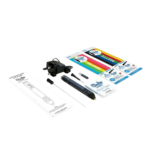
Runner-upwards: 3Doodler - Create
Every bit the "unrefuted original 3D pen," the 3Doodler boasts corking build quality and first-class user support. Information technology comes with anodized aluminum structure and loftier-quality filament. Only nosotros don't recommended it for children unless y'all provide developed supervision.
The biggest drawback of the 3Doodler Create was the loading and unloading of filament, which we found clunky and time consuming. It comes with iii tools to help unclog the pen. One for removing the extruder tip, i long thin metal rod for pushing stuck filament through and one for unscrewing the panel that exposes the motor. Every bit such, nosotros do not recommend this model for immature children without supervision. In one case in use, the experience was solid, but having to change the filament was a nuisance. It interrupted our artistic period more than any other 3D pen.
3Doodler fares well in the Simple Shapes Cartoon test and Build Quality but loses out because of its inefficient loading and unloading procedure. Furthermore, 3Doodler filament is much shorter than the others, requiring more frequent refilling.
Despite these issues and higher toll (about $30 more than Mynt3D), 3Doodler Create offers an overall experience that feels higher in quality. Its documentation and website are by far the most convenient, while another brands (like Sunlu) barely come with any instructions. Though the biggest reviewer complaints was the price of pen and filament, the quondam aphorism, "you get what you pay for," certainly applies. For more than serious hobbyists with deeper pockets, 3Doodler is a potent contender.
Key takeaways:
- 3Doodler – Create's anodized aluminum body stands out with the nicest construction of the bunch.
- This pen has by far the nigh user-friendly documentation and instructions available from the manufacturer.
- High quality filament and drawing experience, but users are forced to use proprietary 3Doodler filament.
Other finalists we tested
7Tech
7Tech's 3D Printing Pen was has one of the nigh ubiquitous designs of all the pens available on Amazon. Sold nether countless other brands, it became clear to us why its design is so persistent. It operates reasonably well, with depression blockage rates, though we plant its shape hard to wield. It's top-heavy on its own, simply the loaded filament dangling at the height only makes matters worse.
The big pen often feels out of balance and thus challenging to control precisely. The stepless speed command suffers from awkward placement and often registered unintentionally. The buttons and build feel overall light and cheap, especially for the price tag of around $54.50. The digital brandish screen, like everything else, looked low-budget. Just with all of its blueprint woes, nosotros can't deny that it actually functioned really well. Not only that, information technology was one of the fastest pens, good for those looking for speed. However, similar all the other pens too Mynt3d, the filament overflowed later the load button disengaged, making for an extra messy workspace.
Sunveza
This model of 3D pen was also i of those designs that had multiple brandings under different names and colors. This particular brand did an impressive job of going "upscale" in its packaging, but it cruel curt in execution. The all-white box harkens back to Apple tree's branding style, which all too oft companies borrow in try to crash-land upwards in price bracket. This model comes with a matching pen stand in matching rubberized black.
Though attractive, information technology didn't work for us at all. Anchored not by weight but by suction cup, the stand fell over many times during apply, proving to be more of a danger than a help. The residuum of our experience echoes this disappointment: it looks good but disappoints in quality. It may expect similar information technology's worth the cost of $70, only it performs more than closely to the 7tech at the $50 toll indicate. Overall, it is a useable pen with a low blockage charge per unit, but it just doesn't live up to the high-cease expect of its packaging.
Sunlu
Some other model of 3D pen that we've seen with dissimilar branding, Sunlu is not only the cheapest in price, but also of design and structure. Off the bat, its biggest drawback is that information technology simply uses PLA plastic. Nonetheless, because of its toll, Sunlu could be a worthy contender for the younger set, costing nearly $thirty (a quarter of the price of the 3Doodler). Its PLA-only limitation conveniently falls in line with our earlier recommendation that children use PLA over more toxic ABS thermoplastic.
However, we don't recommend Sunlu for those who plan to log in serious hours 3D doodling. Button placement is frustrating, with both the load and unload buttons much too close to each other. Nosotros hit the incorrect push too many times, causing slips and mess ups. Not but that, it is also the only pen out of the bunch without a speed control. Ane unique feature is that the loading button can be switched to either continuous or momentary mode.
Unfortunately, we had trouble switching modes and there was no indication of which way was engaged. Overall, the Sunlu gave us the nigh frustrating experience, reflected in its low functioning grades. Its low toll point turned out to be its best feature, though information technology may come at the cost of your sanity!
Atmosflare
Nosotros had loftier hopes for Atmosflare 3D Drawing Pen, simply its difficulty to use hampered its advantages. Information technology was the only pen in our grouping that uses UV LED light instead of heat to cure the ink, which Atmosflare claims is safer to use than high-heat thermoplastic pens. Unlike the other pens, it does not demand to exist plugged in. Instead, the Atmosflare requires i A-battery which powers the LED UV spotlight at the tip of the pen, rated to last iv hours. At that place are no other mechanical parts; you apply your hands to clasp the ink out of the cartridge, not unlike puffy paint.
Considering cool UV ink works differently than thermoplastic filament, we unexpectedly faced delays in our testing. Its instructions were overly simplistic and failed to state that a plastic working surface was necessary for tracing stencils. The ink absorbed into paper and paper-thin and therefore didn't fully cure. We found that not merely did the surface have to be plastic, merely transparent as well. It was necessary to cure the underside too every bit the top, and a transparent surface allows you to shine the UV light through the bottom. Finally experimenting with a clear plastic purse, nosotros succeeded in creating an object.
The lack of instructions proved to be always more frustrating. We fumbled effectually until we institute Youtube videos produced by Atmosflare that explained its specific rules of operation. All of the 3D pens have quirks of their own, simply nosotros found that the Atmosflare was the most fussy and time-consuming to operate. Information technology took a nifty deal of patience and endurance of the manus to get fifty-fifty lines.
The pen itself suffered from design flaws that caused the cartridge to pop out repeatedly during utilise. If nosotros were not conscientious to shut off the spotlight before starting a line, it was very decumbent to clogging. When successful, nosotros were notwithstanding left with a mucilaginous mess that didn't seem to always cure completely. In the stop, we are hesitant to recommend this pen. As mentioned before, we didn't believe that it was necessarily safer for children than thermoplastic pens, as nosotros were unable to detect whatever physical proof of the safety of UV light exposure.
How we selected finalists to test
With enough of coffee and sheer determination, nosotros spent a week of online inquiry to find the almost meaningful $.25 of information on 3D pens. We sifted through everything we could discover to assistance us design testing methods and criteria, including other review sites, Reddit and instructional YouTube videos.
Faced with a staggering number of brands, we certainly had our work cut out for us. How practise they differ from one another? Are some of them the same but with dissimilar branding? Unable to exam each and every one (some models are already out of production), it was near incommunicable to know. Instead, we relied on natural selection and focused on the best-selling and best-rated models on Amazon. We also selected other standout pens with unique features and dissimilar technologies to reach a more than diverse cantankerous-section.
Without further ado, nosotros present our top picks for the All-time 3D Pens under $100.
The history of 3D pens
The offset 3D pens were invented by Maxwell Bogue and Peter Dilworth of 3Doodler. The inspiration came from a moment of exasperation when a 14-hour 3D print chore missed a line. If just they could remove the extruder and fill up it in by hand, they idea. This was their "Eureka!" moment and the first prototypes shortly followed that same yr in 2012.
However, information technology was not the kickoff time this idea came up. In 1995, a visitor chosen Stratasys filed a patent for an "apparatus and method for creating iii-dimensional objects." This conception goes on to draw a machine controlled by computers, akin to the 3D printer we know today.
Interestingly, the patent references an earlier handheld device called the Matt Wax Gun, used to create wax models for jewelry. The Matt Wax Gun looks like a mucilage gun, just uses wax instead of glue and functions very much like a 3D pen. The date of invention is unknown to us, but books on wax modeling date every bit early as 1982. An industry-irresolute innovation in its own correct, it enabled designers to create airy and spontaneous shapes every bit they were able to plot lines in the air.
Though similar in many means, 3D pens differ in their utilise of thermoplastics instead of wax. The pen format leads to a more natural cartoon position than the gun shape. Plastics allow for more rigid and permanent setting, pliable and sometimes flexible depending on the material. Along with more than common plastics like ABS and PLA, some pens offering compatibility with hybrids mixed with wood, metallic or TPU, which is a flexible thermal polyurethane. At the core, the bones technology is the same: a heating element brings the material to melting bespeak earlier a motor (or manual part) extrudes it from the tip where it dries almost instantaneously.
3Doodler's initial Kickstarter campaign thrust the idea of 3D pens to popularity, raising over one 1000000 dollars on its $xxx,000 goal. Many companies took detect of the demand and followed accommodate, flooding the market with a myriad of options.
How do 3D pens work?
In that location are 2 different types of 3D pen types: thermoplastic and absurd UV ink. Both types depend on the technology of cloth shifting from liquid to solid at simply the right moment. These unproblematic technologies permit for the author to "lift off" from the flat medium of newspaper into three dimensional space.
Thermoplastic 3D pens
In the more than ubiquitous thermoplastic pen type, plastic filament feeds into the pen where it's heated to its melting point, and so it extrudes from the tip and dries again every bit a solid line. This enables the user to "draw in the air," so long as the line has enough structural support. The real magic lies in the materials used as ink: thermoplastic.
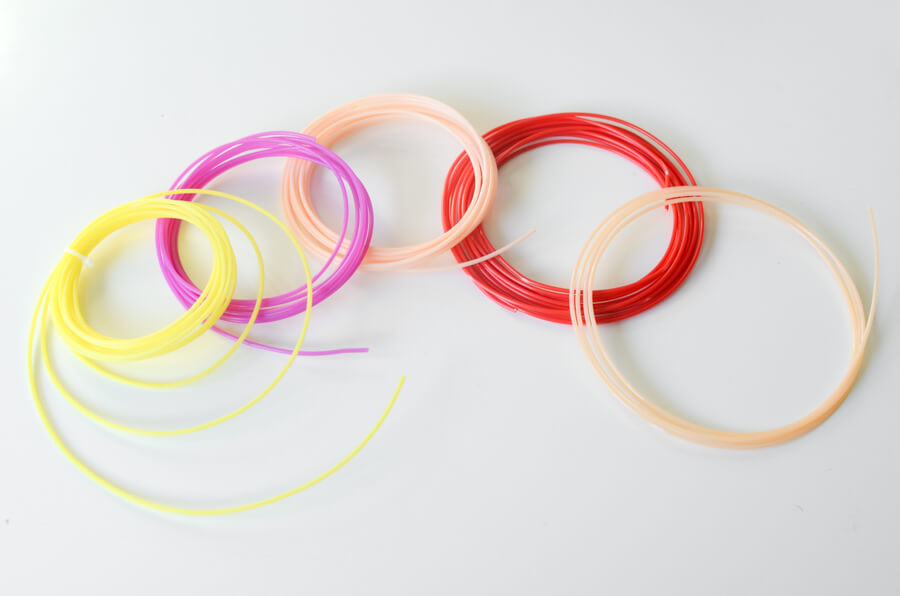
When English scientist Alexander Parkes discovered thermoplastic in 1862, no one could have imagined we would one day use this cloth as ink! Today, thermoplastic is widely available in many types and colors, typically in reels of 1.75mm, and fix to dispense in 3D pens and printers.
Types of thermoplastic
ABS: Acrylonitrile Butadiene Styrene is a thermoplastic polymer. Legos are made of ABS. They announced more than matte in appearance, and set slightly quicker than PLA.
PLA: Polylactic Acid is a thermoplastic aliphatic polyester typically made from cornstarch, tapioca roots, chips or saccharide cane. This cloth feels more breakable than ABS and has a glossy finish.
Other:3Doodler Pro serial offers a diversity of proprietary materials, including metal and woods polycarbonate mixes. Their Flexy fabric is bendable unlike ABS and PLA.
Safety of thermoplastic
One of the first things we noticed while using 3D pens is the unpleasant smell. To our dismay, nosotros found that plastic extrusion releases toxic VOCs (Volatile Organic Carbon) so users should work in well-ventilated areas and exercise extra caution with children. Despite some claims, organically derived PLA likewise gives off VOCs, though studies show that ABS is significantly more toxic.
Dr. Fabrizio Merlo and Dr. Eng. Stefano Mazzoni found ammonia, cyanidric acid, phenol and benzene amid the harmful gasses emitted via plastic fusion and heating. Another potential danger are harmful nanoparticle emissions, which can exist absorbed by animate or through the skin. Their study finds that ABS emits 3 to xxx times more than nanoparticles than PLA.
They also note that it takes 10 to xxx minutes later extrusion process ends to clear dorsum to standard levels. To complicate matters, toxic emission levels vary wildly betwixt different versions of the aforementioned types of plastic. As both 3D press and 3D pens are relatively new to consumers, we expect there to be more than regulation as more information becomes available.
Is thermoplastic condom for children?
This may seem alarming, merely remember that many art materials, such as paints, glues and epoxies, come with toxicity warnings. Therefore, it's important to utilise 3D pens in a well-ventilated surface area and to have breaks in the same manner. Though non completely not-toxic, nosotros recommend that children use PLA filament to minimize the gamble of VOCs. As the tips are heated to upwards of 400 degrees, we also recommend developed supervision to guard confronting burns.
Though very much geared towards kids, we accept to wonder well-nigh prophylactic and regulation of these technologies. None of the pens insisted on advisable age groups, as yous would run into on most retail toys, which gives u.s.a. interruption.
Cool UV ink
The less pop alternative to thermoplastic ink is the "cool ink" variant, as found in the Atmosflare 3D Drawing Pen. Unlike rigid plastic filament, this ink starts out in liquid grade. UV lite and so cures the ink to a solid state as information technology's drawn out from the tip. This is possible thanks to lite-sensitive photopolymers in the ink. The big advantage to this is that at that place is no heating element necessary, barring the danger of burns birthday.
Is UV ink condom for children?
UV ink itself appears to be safe plenty to handle, however, we could not find any definitive statements on the safety of exposure to UV light. We reached out to some makers of UV-curing 3D pens, merely did not receive any replies. We take seen arguments on both sides on Reddit's /r/3Dprinting subreddit, which is enough to shake our confidence.
Fifty-fifty as what some claim to be weak, consumer-grade LED low-cal, we feel reluctant to trust that the same technology used to cure gel manicures and dental procedures is safe without any protection. Moreover, it's baffling that these pens instruct to "avoid looking straight at the spotlight" when information technology seems incommunicable non to stare at its reflections for long stretches during functioning.
Whether it exist UV light or plastic fumes, we strongly recommend extra caution of these potential dangers with either blazon of 3D pen. These technologies may notwithstanding be besides new for proper documentation to accost these concerns. Again, always piece of work in a well-ventilated area and accept plenty of breaks.
Who should apply a 3D pen?
Anyone with a artistic clue should endeavour 3D pens. You lot might not create the side by side Mona Lisa (in 3D), but you might delight in its novelty. Information technology'due south remarkable — you can depict in the air, just non in the same magical way nosotros envisioned. For those who are more than the "pigment by numbers" type, many traceable templates are bachelor online. 3D pens certainly accept a learning bend, similar whatsoever new tool, so patience is key. Many reviewers report frustration with the curve, but merely every bit many expressed the joy and reward of spending the time to learn a new skill.
Similar adult coloring books or other toys geared towards adults and children, 3D pens certainly have that sort of pull towards adults who are young at centre — the ones who held onto a measure out of whimsy leftover from childhood. Be sure to cheque out photos of completed projects to acclimatize yourself to the look of mitt drawn 3D objects. In contrast to very cleanly printed objects past 3D printers, 3D pens have a very squiggly, handheld advent, not too far from puffy pigment.
For the serious and skeptical ready, 3D pens may have some practical usages, such equally fixing 3D print errors or welding broken plastic parts. We noticed some seasoned 3D printer users noting their usefulness on Reddit. Jamie and Adam of Tested.com demonstrate the 3D pen as a companion to a 3D printer, welding printed pieces together into one.
Important features to consider
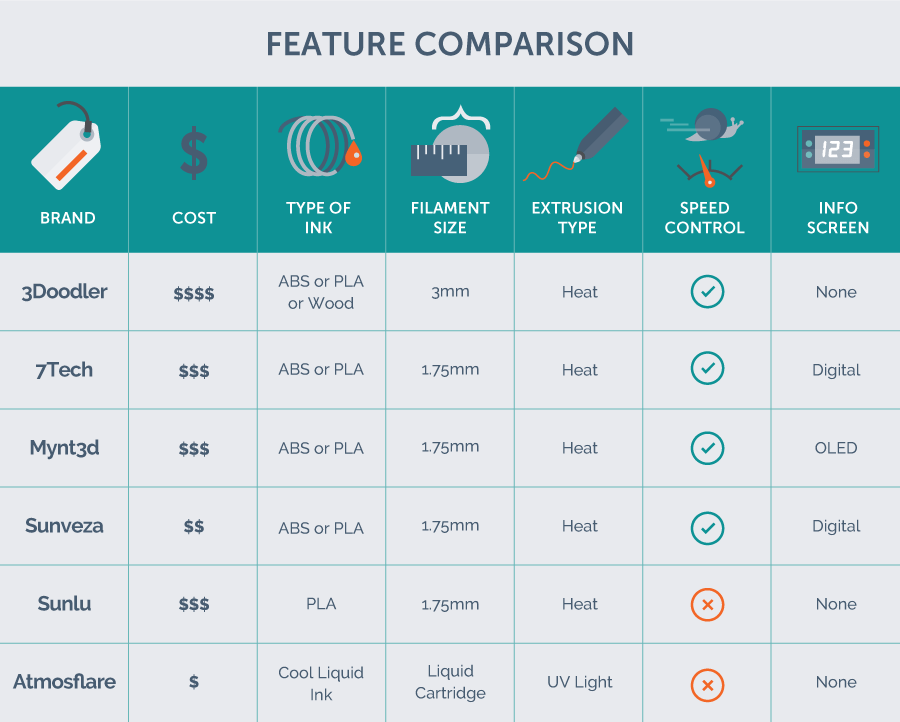
Speed aligning: The ability to modify the speed of extrusion makes for a more tailored experience. Some users but desire to draw faster, while others adopt to draw slower. Having no control means you lot will have to accommodate to the pen'due south default speed. However, having a speed aligning command does non necessarily hateful that its range volition be to your liking.
Fabric compatibility (temperature adjustment): 3D pens with variable temperatures allow for usage of different types of filament. For instance, PLA melts at a much lower temperature than ABS.
Condolement/Design: Because steadiness profoundly influences the quality of your creations, a well-designed 3D pen makes all the difference. 3D pens that feel closer to pens and pencils unsurprisingly experience more natural to use. The process of loading and unloading filaments falls under this category as well. Speed and workflow affect overall enjoyability and ease of employ.
Included plastic filament: Having more colors and types to try out of the box makes for a more than experimental and fun time. Pay attending to the size and type of filaments uniform with your model. Proprietary filament sizes can cost more than standardized sizes. Having more buying options can bring savings in the long run, but users written report that the quality of cheaply available filaments are unpredictable.
How well it works: The only way to know this while you shop is to rely on user reviews. Keep an eye out for overwhelming reports of bottleneck or breakage.
How we tested

Unproblematic shape tracing tests
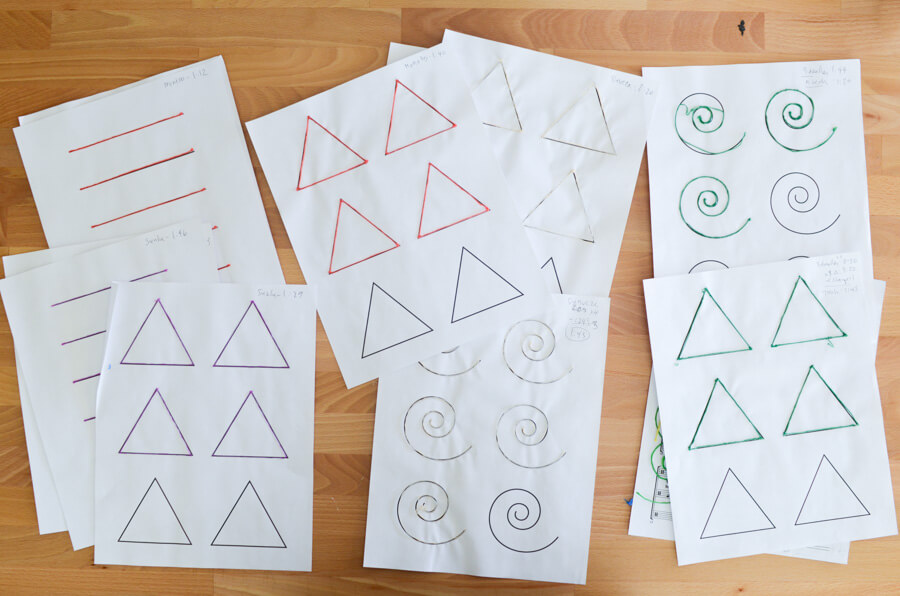
I way to apply 3D pens is to trace outlines on paper to create different planes of an object. The plastic dries in a few moments and the plastic breaks away cleanly from the paper. Attributable to this method, we created Simple Shape Tracing Tests to measure out accuracy and ease of use. We scored the following:
- Straight Line Test
- Triangle Test
- Spiral Test
We timed each set in order to demonstrate the fastest speed setting of each 3D pen.
Free describe test: Calder elephant and Picasso camel
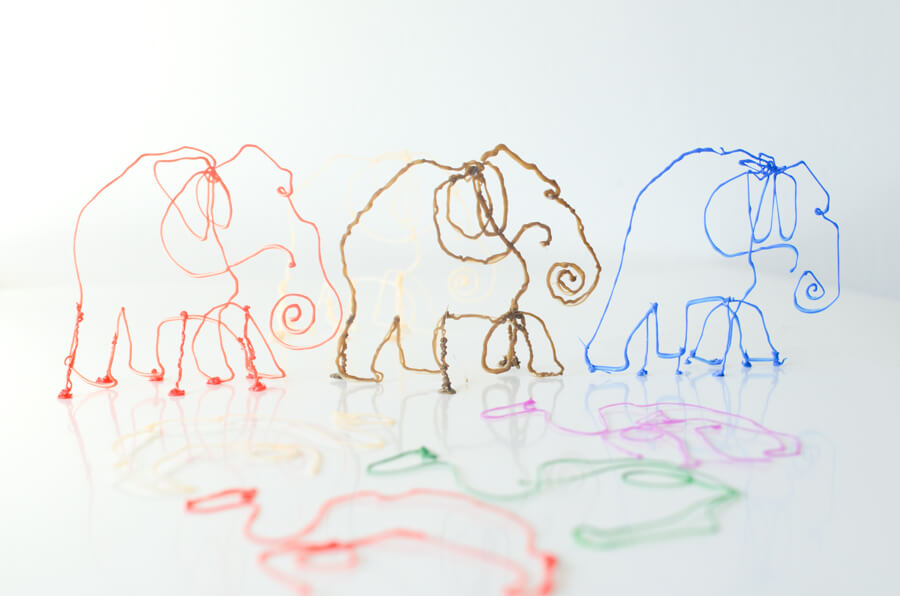
With spontaneity in mind, we rated the feel of free-hand cartoon (without tracing) an Alexander Calder elephant and Pablo Picasso camel. In this test, extrusion speed stands out equally a gene. Faster pens forcefulness the user to motion and think faster, which may be positive or negative depending on preference. We scored each pen for ease, accuracy and enjoyment.
Stencil draw test: 3D eyeglasses
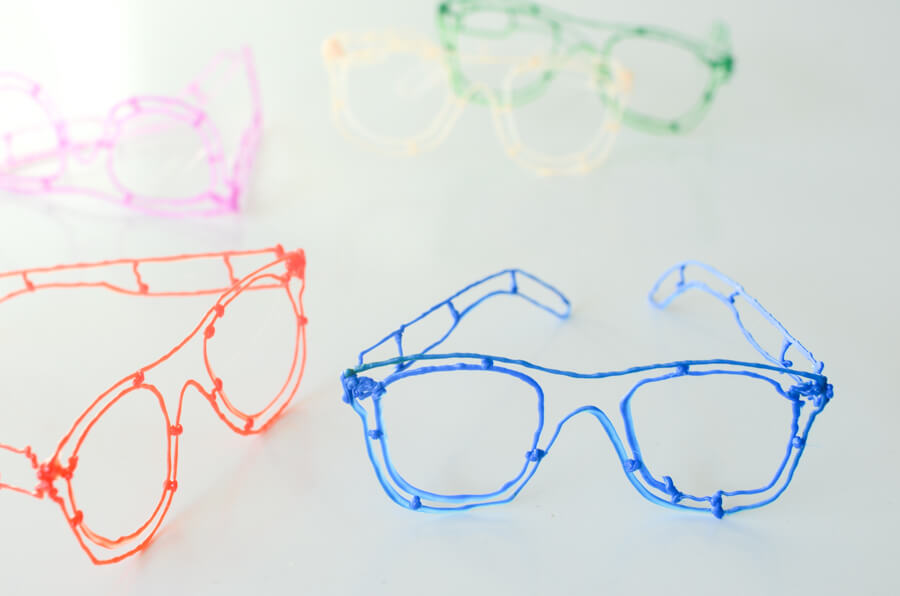
This test combines two essential skills of 3D cartoon: Tracing stencils and welding. These techniques comprise the method used to create three dimensional objects. First, create the flat components, and so bring together them together, like walls of a gingerbread house. There are free libraries of stencils to apply online developed by manufacturers and enterprising enthusiasts.
Print them out on regular paper and y'all'll have the blueprints to anything from the Eiffel Tower to Christmas ornaments. Called for simplicity and combination of rounded and sharp corners, the Eyeglasses stencil consists of three sides joined together at the hinge. Again nosotros graded each pen for ease, accurateness and enjoyment.
User experience grades
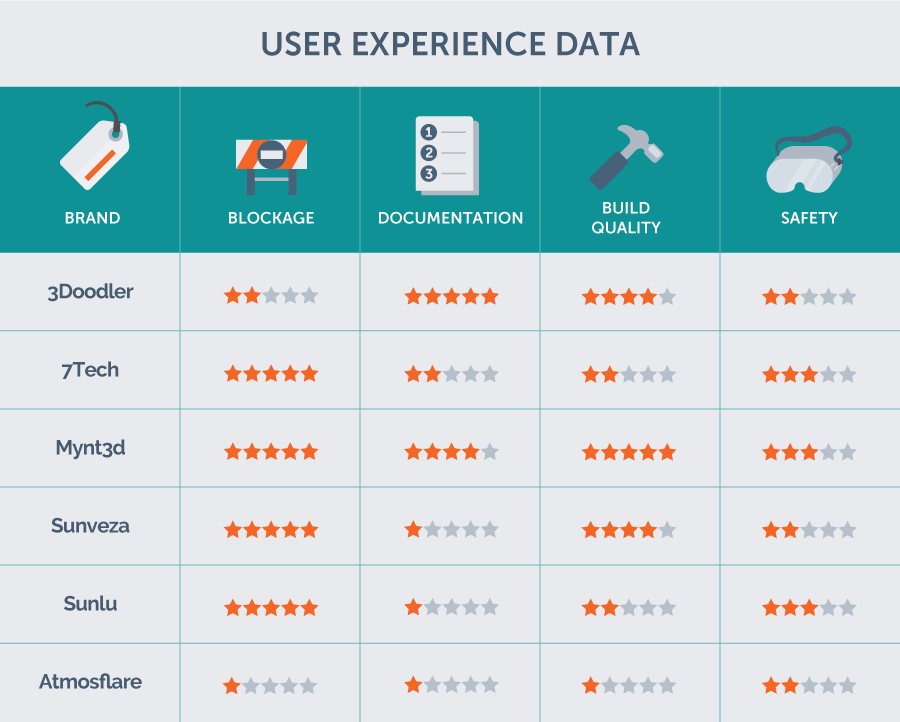
Filament blockage: Pens prone to filament blockage scored depression in this category. Blockages interrupt our artistic train-of-idea, which is no fun!
Directions/Documentation: Having a clear set of instructions is crucial. Some pens offer supportive, user-friendly manuals that elevated our experience, while others left us scratching our heads.
Build and material quality grade: The feeling of treatment each pen really makes a departure. Is it cheap and light? Practise the buttons work? Better materials and construction brand for a better product.
Safety: 3D pens achieve high temperatures to melt plastics known to emit VOCs. Nosotros form each pen on safety and have note of any apparent dangers.
The bottom line
Stacked up against the rest, nosotros knew very quickly that MYNT3D would exist our selection for the all-time 3D pen under $100. Comfortable and easy to use, it facilitated a more free and fun experience. The well-designed MYNT3D Printing Pen operates the almost cleanly and precisely to bring your three-dimensional creations to life.
At the price of effectually $70, it outperforms the more than popular and more than expensive 3Doodler Create, which is our runner-up choice that retails for about $thirty more. With its own strengths, more serious hobbyists may forgive 3Doodler Create's design quirks for higher-quality materials and build, along with an extended range of filament materials.
Until recently, only factories mass produced molded plastic parts with no chance of personal customization. Now, 3D printers pass on plastic fabrication to the consumer. Arming artistic types with tools to forge in this medium is a uniquely new opportunity sure to usher in a new era. Perhaps 3D pens are precursors to even more powerful handheld 3D tools, merely for at present, they perfectly satisfy our inner child equally artistic toys.
Top Pick: MYNT3D - Professional person 3D Printing Pen
The MYNT3D stands out as a dependable 3D printing pen with a meaty size that makes it piece of cake to command. It features a simple loading machinery, and it's the merely pen we constitute that comes with a momentary feed push.

More Reviews

Source: https://www.yourbestdigs.com/reviews/the-best-3d-pen/

Post a Comment for "3d drawing pen the best one most depenable"